
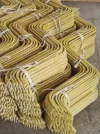
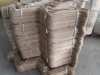
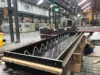


W-Shape Composite Wall Ties – FRP Connectors for Precast Sandwich Insulation Wall Panels
W-shape composite wall ties are structural connectors used in precast concrete sandwich insulation wall panels, where two concrete wythes are separated by a continuous insulation layer. These ties pass through the insulation and mechanically connect the inner and outer wythes, enabling composite action while maintaining thermal efficiency.
Manufactured from glass fiber reinforced polymer (GFRP), W-shape wall ties provide high shear capacity, strong concrete bond, and long-term corrosion resistance. Their distinctive W-shaped profile increases embedment efficiency and load transfer while reducing material usage and thermal conductivity compared to metal connectors .
Structural Function and Load Transfer Mechanism
In composite precast wall systems:
-
Gravity loads, wind loads, and seismic forces must be transferred between wythes
-
The connector must resist interface shear without compromising insulation
-
Long-term durability is critical due to limited access after installation
W-shape composite wall ties are designed to:
-
Transfer shear forces efficiently between concrete wythes
-
Maintain composite structural behavior
-
Prevent differential movement and cracking
-
Preserve insulation continuity
Their geometry improves mechanical anchorage while keeping stress concentrations low within the concrete.
Material Design and Geometry Advantages
W-shape FRP wall ties combine material performance with geometric efficiency:
-
GFRP construction eliminates corrosion and rust expansion
-
W-shaped legs increase bond length and anchoring area
-
Non-metallic composition minimizes thermal bridging
-
Balanced stiffness reduces stress concentrations
The result is a connector that supports structural demands while improving the thermal and durability performance of the wall panel system .
Key Features and Advantages
| Feature | Description |
|---|---|
| Corrosion-Free | Will not rust, oxidize, or degrade |
| Low Thermal Conductivity | Minimizes heat transfer through insulation |
| High Shear Capacity | Supports composite action between wythes |
| Strong Concrete Bond | Optimized geometry enhances anchorage |
| Lightweight | Easy handling and faster installation |
| Non-Magnetic | Suitable for sensitive building environments |
| No Patching Required | Eliminates post-installation repairs |
| Long Service Life | Designed for permanent precast applications |
These characteristics make W-shape composite wall ties a preferred solution for high-performance building envelopes .
Applications
W-shape composite wall ties are widely used in:
-
Precast concrete sandwich insulation wall panels
-
Commercial and industrial buildings
-
Cold storage and temperature-controlled facilities
-
Data centers and utility buildings
-
Institutional and infrastructure projects
-
Energy-efficient building envelopes
They are especially effective where thermal performance, durability, and long-term structural reliability are critical.
Why W-Shape Composite Wall Ties Instead of Metal Connectors
| Aspect | W-Shape FRP Wall Ties | Metal Wall Ties |
|---|---|---|
| Thermal Bridging | Minimal | Significant |
| Corrosion | None | High risk |
| Magnetic Interference | None | Possible |
| Maintenance | None | Possible patching |
| Durability | Long-term | Limited |
| Energy Efficiency | High | Reduced |
Conclusion:
W-shape composite wall ties eliminate the primary weaknesses of metal connectors while improving both structural and thermal performance.
Compatibility with Precast Sandwich Panel Systems
W-shape composite wall ties are compatible with:
-
Common precast concrete sandwich panel designs
-
Rigid foam insulation layers
-
Various concrete mix designs and panel thicknesses
-
Automated and manual precast production methods
Their adaptable geometry allows integration into existing panel manufacturing processes without major design changes .
Installation Considerations
-
Installed during panel casting
-
Embedded into both concrete wythes
-
Passed through insulation without compression loss
-
No corrosion protection or coating required
-
No post-installation patching necessary
These factors simplify production while improving finished panel quality.
Frequently Asked Questions (FAQs)
Q1: What is the purpose of W-shape wall ties in precast panels?
They connect concrete wythes and transfer shear while maintaining insulation continuity.
Q2: Are W-shape wall ties suitable for permanent structures?
Yes. They are designed for long-term structural applications.
Q3: Do these ties reduce thermal bridging?
Yes. GFRP has much lower thermal conductivity than metal.
Q4: Will they corrode over time?
No. They are completely corrosion-resistant.
Q5: Are they compatible with common insulation materials?
Yes. They are designed for rigid insulation used in sandwich panels.
Q6: Is post-installation patching required?
No. Composite ties eliminate the need for patching or plugging.

