


Fiberglass Thin Wall Tube / Prepreg Round Tube – Lightweight High-Performance Composite Tubing
Fiberglass thin wall tubes and prepreg round tubes are composite structural components produced from glass fiber prepreg materials that cure under controlled heat and pressure. This process transforms the prepreg into a solid, high-performance structure that is exceptionally stiff, lightweight, temperature-resistant, and durable.
Using prepreg roll-wrapping technology ensures repeatable quality and design flexibility. Compared with metal or plastic tubing, fiberglass prepreg round tubes offer superior strength-to-weight performance, corrosion resistance, and long-term dimensional stability. Thin wall construction further optimizes material usage while maintaining structural integrity.
Materials and Fiber Options
Pulwell composite tubes may be manufactured using a wide range of reinforcements, including:
-
Fiberglass prepreg (E-Glass and S-Glass)
-
Carbon fiber prepreg
-
Aramid fiber
-
Hybrid constructions combining multiple fiber types
-
Optional metallic strands or ribbons for special applications
For fiberglass thin wall tubes, unidirectional and woven glass fiber prepregs are commonly used to balance strength, stiffness, and cost efficiency.
Fiber Orientation and Structural Performance
The roll-wrapping process allows precise control of fiber orientation to achieve specific mechanical properties:
-
Unidirectional (0°) orientation
High resistance to bending and axial loads -
90° orientation (radial direction)
High pressure resistance against radial stress -
±45° orientation
Excellent torsional strength -
0° / 90° woven orientation
Balanced strength with uniform structural behavior
Custom fiber angles and multi-angle combinations are available to meet specialized performance requirements.
Key Features and Advantages
| Feature | Description |
|---|---|
| Lightweight Construction | Significantly lighter than steel or aluminum tubes |
| High Strength-to-Weight Ratio | Optimized prepreg fiber architecture |
| Thin Wall Precision | Uniform wall thickness with tight tolerances |
| Excellent Stiffness | High rigidity under bending and torsion |
| Corrosion Resistant | Immune to rust, moisture, and chemicals |
| Temperature Resistant | Thermoset resin system cured under heat |
| Repeatable Quality | Consistent performance across production batches |
Surface Finish and Secondary Processing
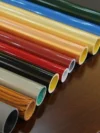
Fiberglass prepreg round tubes are available in multiple surface finishes:
-
Raw wound
-
Sanded
-
Sanded and varnished (clear polished or matte)
-
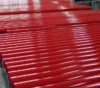
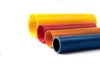
Custom RAL colors
Secondary operations and finishing services include:
-
Spray painting and squeegee painting
-
Silk screening and pad printing
-
Heat transfer decals and foil stamping
-
Cutting, drilling, bonding, and assembly
These options allow fiberglass thin wall tubes to meet both functional and aesthetic requirements.
Applications of Fiberglass Thin Wall & Prepreg Round Tubes
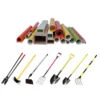
Fiberglass prepreg round tubes are widely used in both industrial and consumer applications, including:
-
Engineering systems (transport shafts, handling systems)
-
Robotics (grappler arms, robotic structures)
-
Aeronautical and aerospace engineering
-
Telescopic systems and measurement equipment
-
Automotive components
-
Medical technology (prosthetics and supports)
-
Sporting goods (paddle rods, ski poles, hockey sticks)
-
Consumer electronics and lifestyle products
-
Industrial rollers, tripods, tent poles, and conveyor systems
These tubes often replace steel, aluminum, plastic, or conventional fiberglass tubing with lighter, stronger, and more durable alternatives.
Product Specifications (Typical Range)
| Parameter | Specification |
|---|---|
| Material | Fiberglass Prepreg (E-Glass / S-Glass) |
| Manufacturing Process | Prepreg Roll-Wrapping |
| Outer Diameter | Custom per design |
| Wall Thickness | Thin wall, application-specific |
| Fiber Orientation | 0°, 90°, ±45°, or combined |
| Resin System | Thermoset epoxy |
| Surface Finish | Raw, sanded, varnished, painted |
| Density | Approx. 1.9 g/cm³ |
| Structural Behavior | High stiffness and fatigue resistance |
Custom designs are available based on mechanical and dimensional requirements.
Why Choose Prepreg Round Tubes?
| Aspect | Prepreg Round Tube | Conventional Tubes |
|---|---|---|
| Weight | Very light | Heavier |
| Structural Efficiency | Optimized | Limited |
| Fiber Control | Precise | Inconsistent |
| Surface Quality | High | Variable |
| Durability | Excellent | Moderate |
| Design Flexibility | High | Low |
Conclusion:
Prepreg fiberglass thin wall tubes deliver superior structural performance, repeatable quality, and long-term reliability for demanding applications.
Installation and Handling Guidelines
-
Handle tubes carefully to avoid point impacts.
-
Cut using appropriate carbide or diamond tools.
-
Drill with controlled feed rates to prevent delamination.
-
Bond or assemble using compatible structural adhesives.
-
Follow design limits for load, torsion, and bending.
No corrosion protection or coating is required.
Customer Benefits
-
Significant weight reduction
-
High stiffness and strength
-
Long service life with minimal maintenance
-
Custom fiber architecture for optimized performance
-
Broad finishing and processing options
-
Suitable for industrial, technical, and consumer products
Frequently Asked Questions (FAQs)
Q1: What is a prepreg round tube?
A prepreg round tube is made from fibers pre-impregnated with resin, cured under heat and pressure for superior strength and consistency.
Q2: What makes fiberglass thin wall tubes different?
Thin wall tubes reduce weight while maintaining stiffness and structural integrity.
Q3: Can fiber orientation be customized?
Yes. Fiber angles can be tailored to bending, torsion, or radial strength requirements.
Q4: Are surface finishes customizable?
Yes. Multiple finishes and decorative processes are available.
Q5: Can these tubes replace metal tubes?
In many applications, yes. They offer lighter weight and better corrosion resistance.
Q6: Are custom products available?
Yes. Custom designs, dimensions, and layups are supported.
