
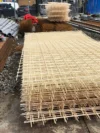
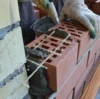
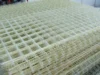


Fiberglass Rebar Mesh – Lightweight, Corrosion-Resistant Reinforcement Solution
Fiberglass rebar mesh, also known as GFRP reinforcing mesh, is manufactured from high-strength fiberglass fibers embedded in a polymer resin matrix. It is specifically engineered to reinforce concrete while eliminating the common problems associated with traditional steel reinforcement, such as corrosion, rust expansion, and heavy weight.
Because fiberglass rebar mesh is non-metallic and non-conductive, it performs exceptionally well in aggressive environments including coastal areas, chemical plants, roadways exposed to de-icing salts, and wastewater facilities. Its lightweight structure reduces labor costs, speeds up installation, and improves overall construction efficiency.
Key Features and Advantages
| Feature | Description |
|---|---|
| Corrosion Resistant | Will not rust, oxidize, or deteriorate in harsh environments |
| Lightweight | Up to 75% lighter than steel mesh for easier transport and handling |
| High Tensile Strength | Comparable tensile strength to steel reinforcement |
| Non-Conductive | Electrically and thermally non-conductive |
| Non-Magnetic | Ideal for MRI rooms, laboratories, and sensitive facilities |
| Long Service Life | Extends concrete lifespan and reduces maintenance |
| Easy Installation | Can be cut on-site with standard tools |
Applications of Fiberglass Rebar Mesh
Fiberglass rebar mesh is widely used across commercial, industrial, and civil engineering projects, including:
-
Concrete slabs and foundations
-
Roadways, bridges, and pavements
-
Marine structures and coastal construction
-
Precast concrete panels
-
Tunnels and underground structures
-
Industrial floors and warehouses
-
Agricultural and water management facilities
Its resistance to moisture, chemicals, and salt exposure makes fiberglass rebar mesh especially suitable for environments where steel reinforcement fails prematurely.
Product Specifications
| Parameter | Specification |
|---|---|
| Material | Glass Fiber Reinforced Polymer (GFRP) |
| Mesh Size | 50×50mm / 100×100mm / custom |
| Bar Diameter | 4mm – 12mm |
| Tensile Strength | ≥ 1,000 MPa |
| Elastic Modulus | 45–60 GPa |
| Density | Approx. 1.9 g/cm³ |
| Surface Type | Sand-coated or ribbed |
| Alkali Resistance | Excellent |
| Thermal Conductivity | Low |
| Service Life | 50+ years (design life) |
Why Choose Fiberglass Rebar Mesh Over Steel Mesh?
| Comparison | Fiberglass Rebar Mesh | Steel Mesh |
|---|---|---|
| Corrosion Resistance | Excellent | Poor |
| Weight | Very light | Heavy |
| Magnetic | Non-magnetic | Magnetic |
| Electrical Conductivity | Non-conductive | Conductive |
| Installation Speed | Fast | Slower |
| Maintenance Cost | Minimal | High |
| Service Life | 50+ years | 20–30 years |
Conclusion:
Fiberglass rebar mesh provides superior durability and life-cycle cost advantages compared to steel reinforcement, especially in corrosive or moisture-prone environments.
Installation Guidelines
-
Prepare the concrete base and formwork.
-
Lay the fiberglass rebar mesh evenly across the surface.
-
Use plastic spacers or chairs to maintain correct cover depth.
-
Overlap mesh panels according to engineering requirements.
-
Pour concrete directly over the installed mesh.
No welding or anti-corrosion coating is required.
Customer Benefits
-
Reduced transportation and labor costs
-
Improved safety due to lightweight handling
-
Longer-lasting concrete structures
-
Lower total cost of ownership
-
Environmentally friendly and sustainable solution
-
Consistent quality with factory-controlled production
Frequently Asked Questions (FAQs)
Q1: Is fiberglass rebar mesh as strong as steel mesh?
Yes. Fiberglass rebar mesh offers comparable tensile strength and superior corrosion resistance.
Q2: Can fiberglass rebar mesh be used in structural concrete?
Yes, when designed according to engineering standards and load requirements.
Q3: Does fiberglass rebar mesh rust over time?
No. It is completely corrosion-resistant and unaffected by moisture or chemicals.
Q4: Can it be cut on-site?
Yes. It can be cut using common hand tools or power tools.
Q5: Is fiberglass rebar mesh approved by building codes?
Many regions approve GFRP reinforcement under ASTM and ACI guidelines. Always verify local codes.
Q6: Where is fiberglass rebar mesh most commonly used?
It is widely used in marine, roadway, industrial, and infrastructure projects.