
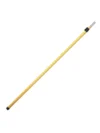
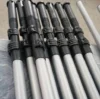

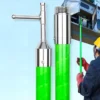


Fiberglass Extension Pole / Telescoping Pole – Lightweight, Strong & Non-Conductive Reach Solutionse
Fiberglass extension poles—also known as telescoping fiberglass poles—are adjustable-length tools designed to provide extended reach while maintaining strength, control, and user safety. Manufactured from glass fiber reinforced polymer (GFRP), these poles combine low weight with high stiffness and excellent electrical insulation.
Unlike aluminum or steel poles, fiberglass telescoping poles are non-conductive, corrosion-resistant, and dimensionally stable, making them suitable for both indoor and outdoor use across a wide range of professional environments.
Material Design and Construction
Fiberglass extension poles are engineered using composite construction optimized for strength, safety, and durability:
-
Glass fiber reinforced polymer (GFRP) shaft
-
Multi-section telescoping design
-
Smooth or lightly textured surface for grip
-
Reinforced wall thickness for bending resistance
-
UV-resistant resin system for outdoor exposure
This construction ensures consistent performance even under repeated extension, retraction, and load cycles.
Key Features and Advantages
| Feature | Description |
|---|---|
| Lightweight | Reduces user fatigue during extended use |
| High Strength | Maintains stiffness and control at full extension |
| Non-Conductive | Safe for use near electrical equipment |
| Corrosion Resistant | Will not rust or degrade in wet environments |
| Telescoping Design | Adjustable length for multiple tasks |
| Dimensional Stability | Maintains straightness over time |
| Impact Resistant | Durable under daily professional use |
| Low Maintenance | No painting or surface treatment required |
These features make fiberglass extension poles a preferred choice for professional-grade applications.
Common Applications
Fiberglass extension poles are widely used in:
-
Window cleaning and facade maintenance
-
Painting and coating operations
-
Solar panel cleaning and inspection
-
Lighting maintenance and fixture access
-
Agricultural harvesting and pruning tools
-
Utility and electrical safety applications
-
Industrial cleaning and maintenance
-
Camera, inspection, and tool mounting systems
Their versatility allows one pole system to support multiple interchangeable attachments.
Telescoping Mechanism and Locking Options
Fiberglass telescoping poles are available with various extension and locking mechanisms to suit different use cases:
-
Twist-lock systems for smooth adjustment
-
Lever-lock or cam-lock systems for quick length changes
-
Internal stop designs to prevent over-extension
-
Secure locking to minimize flex and vibration
These systems allow precise length control while maintaining structural stability.
Why Choose Fiberglass Over Aluminum or Steel Poles
| Aspect | Fiberglass Poles | Aluminum Poles | Steel Poles |
|---|---|---|---|
| Electrical Conductivity | Non-conductive | Conductive | Conductive |
| Weight | Light | Light | Heavy |
| Corrosion Resistance | Excellent | Moderate | Poor |
| Outdoor Durability | High | Moderate | Moderate |
| User Safety | High | Lower | Lower |
| Maintenance | Minimal | Moderate | High |
Conclusion:
Fiberglass extension poles offer the best balance of safety, durability, and performance for professional users.
Available Configurations
-
Single-section or multi-section telescoping poles
-
Custom extended lengths and collapsed lengths
-
Round or tapered tube profiles
-
Standard or reinforced wall thickness
-
Compatible threaded or quick-connect end fittings
-
OEM customization available
Poles can be tailored for specific industries, tools, and working environments.
Installation and Use Considerations
-
Always extend sections evenly and lock securely
-
Avoid point loading beyond design limits
-
Clean and dry locking areas for optimal performance
-
Store poles retracted when not in use
-
Inspect periodically for surface damage or wear
Proper use ensures long service life and consistent performance.
Frequently Asked Questions (FAQs)
Q1: Are fiberglass extension poles electrically safe?
Yes. Fiberglass is non-conductive and commonly used for electrical safety applications.
Q2: Do fiberglass telescoping poles bend under load?
They are designed to maintain stiffness, though some controlled flex is normal at maximum extension.
Q3: Can these poles be used outdoors long-term?
Yes. UV-resistant resin systems support long-term outdoor exposure.
Q4: Are attachments compatible with standard fittings?
Yes. Many poles support threaded or quick-connect accessories.
Q5: How long do fiberglass extension poles last?
With proper use, they offer long service life with minimal maintenance.
Q6: Are custom lengths available?
Yes. Custom configurations can be produced for specific requirements.