




Carbon Fiber CFRP Strip / Plate – High-Strength Laminates for Structural Strengthening
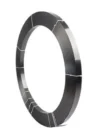
Carbon fiber CFRP strips (also referred to as CFRP plates or laminates) are pre-cured composite reinforcement elements manufactured from high-strength carbon fibers embedded in an epoxy resin matrix. They are designed for externally bonded strengthening of existing concrete, masonry, and timber structures subjected to increased loads, deterioration, or design deficiencies.
Externally bonded CFRP strengthening systems are structurally analogous to steel plate bonding but offer significantly reduced weight, improved durability, and superior resistance to corrosion. When properly installed, CFRP strips restore or enhance structural capacity without increasing dead load or altering member geometry .
Material Composition and Manufacturing
Carbon fiber CFRP strips are produced under controlled factory conditions to ensure consistent quality and mechanical performance:
-
High-strength unidirectional carbon fiber reinforcement
-
Thermoset epoxy resin system
-
Pre-cured laminate with controlled fiber volume fraction
-
One surface textured or prepared for adhesive bonding
-
Continuous production ensuring uniform thickness and properties
Factory-controlled manufacturing eliminates the variability associated with field wet lay-up systems and ensures predictable structural behavior.
Structural Strengthening Mechanism
Externally bonded CFRP strips function by:
-
Increasing flexural capacity of reinforced concrete members
-
Enhancing shear resistance where required
-
Redistributing stresses in deteriorated or cracked sections
-
Compensating for loss of reinforcement capacity
-
Accommodating increased service loads or change-of-use demands
The effectiveness of CFRP strengthening is bond-critical, meaning performance depends on proper surface preparation, adhesive selection, and installation workmanship rather than laminate rupture .
Key Features and Advantages
| Feature | Description |
|---|---|
| Extremely High Tensile Strength | Tensile strength ≥ 2800 MPa |
| High Elastic Modulus | Modulus ≥ 160 GPa for stiffness improvement |
| Lightweight | Much lighter than steel plate bonding |
| Corrosion-Free | Will not rust or degrade |
| Pre-Cured Laminate | Consistent properties and thickness |
| Prepared Bonding Surface | Improved adhesion to structural adhesives |
| Minimal Section Increase | Preserves architectural clearance |
| Compatible with Multiple Adhesives | Works with commercially available structural epoxies |
These features make CFRP strips suitable for both rehabilitation and upgrading of existing structures.
Typical Sizes and Mechanical Properties
Popular Strip Dimensions
| Type | Thickness (mm) | Width (mm) |
|---|---|---|
| 12050 | 1.2 | 50 |
| 12100 | 1.2 | 100 |
| 14050 | 1.4 | 50 |
| 14100 | 1.4 | 100 |
Mechanical Properties
| Property | Typical Value |
|---|---|
| Tensile Strength | ≥ 2800 MPa |
| Tensile Modulus | ≥ 160 GPa |
| Elongation at Break | ≥ 1.7% |
| Fiber Content | ≥ 65% |
| Barcol Hardness | 50–60 |
| Glass Transition Temperature (Tg) | > 100 °C |
Tensile and modulus properties are measured in accordance with ASTM D3039, and design values align with definitions in ACI 440.1R .
Thermal and Physical Characteristics
-
Coefficient of thermal expansion (lengthwise): −4 to 0 × 10⁻⁶ /°C
-
Coefficient of thermal expansion (widthwise): 74 to 104 × 10⁻⁶ /°C
-
Specific gravity: Optimized for high strength-to-weight ratio
The near-zero longitudinal thermal expansion makes CFRP strips highly compatible with concrete substrates under temperature variation.
Applications
Carbon fiber CFRP strips and plates are widely used in:
Externally Bonded Structural Strengthening
-
Bridge decks
-
Parking garages
-
Floor slabs
-
Beams and girders
-
Overhead structural members
Shear and Flexural Strengthening
-
RC beams and slabs
-
Load increase or change-of-use scenarios
-
Deteriorated members requiring capacity restoration
Masonry Strengthening
-
In-plane and out-of-plane strengthening of masonry walls
-
Seismic and blast load resistance
-
Rehabilitation of cracked masonry structures
These applications are well-established across infrastructure, commercial, and industrial construction sectors .
Handling and Installation Considerations
-
Supplied in continuous coils, typically 50–100 m in length
-
Do not shear CFRP laminates; cut using grinder or diamond blade
-
Substrate must be sound, clean, and properly prepared
-
Adhesive bond line thickness typically 2–3 mm
-
Surface preparation and leveling are critical to performance
-
Typical failure mode is debonding, not laminate rupture
Proper installation following recognized guidelines (e.g., ACI-based practices) is essential for achieving design performance.
Why CFRP Strips Are Preferred Over Steel Plate Bonding
| Aspect | CFRP Strip | Steel Plate |
|---|---|---|
| Weight | Very light | Heavy |
| Corrosion | None | High risk |
| Installation | Easier overhead | Difficult |
| Dead Load Increase | Minimal | Significant |
| Durability | Long-term | Limited |
| Handling | Safer | Labor-intensive |
Conclusion:
CFRP strips provide a modern, high-performance solution for structural strengthening where durability, efficiency, and minimal disruption are required.
Frequently Asked Questions (FAQs)
Q1: What is a CFRP strip used for?
To strengthen existing concrete, masonry, or wood members in flexure and shear.
Q2: Are CFRP strips stronger than steel?
They have much higher tensile strength than steel at a fraction of the weight.
Q3: Do CFRP strips corrode?
No. They are completely corrosion-resistant.
Q4: What governs CFRP strengthening performance?
Bond quality between substrate, adhesive, and CFRP laminate.
Q5: Can CFRP strips be used overhead?
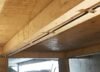
Yes. They are especially effective in overhead flexural strengthening applications.
Q6: Are they supplied pre-cured?
Yes. CFRP strips are factory pre-cured with controlled properties.